Why the finest hand-finishing happens in near-silence, what that quiet does to the tension on a thread, and how patience becomes part of the garment itself.
Visitors to the atelier often remark, almost in a whisper, on how quiet it is. They expect the clatter of a workshop and find something closer to a reading room — where the loudest sound is a flat machine run deliberately at half speed and, beyond it, nothing but a needle passing through tulle. The silence surprises them. To us it is simply the natural climate of work done well by hand.
Handwork is concentration made visible
Appliqueing a lace motif onto silk takes an hour for a palm-sized flower, worked stitch by stitch around every lobe of the pattern with thread you should not be able to find afterwards. A hand-rolled hem on silk chiffon is rolled between thumb and finger, a few millimetres at a time. Setting a bow at the centre gore, burying thread ends inside a seam, tacking a strap end so no raw edge ever meets skin — these are hundreds of small deliberate movements, each one adjusting for that exact spot of cloth. Concentration of this depth does not survive noise. The quiet is not atmosphere. It is the precondition of the precision.
What the quiet does to the hand
Something happens to a maker's hand in deep quiet that does not happen in distraction. The pace evens out. The tension on the thread becomes consistent — and thread tension is the whole game in fine fabric, because a stitch pulled a fraction too tight in silk does not merely look wrong, it puckers a line that will never press out. A row of hand-stitching done in a calm room has an unhurried evenness the same maker cannot produce while talking or while rushed. The garment, quite literally, records the state in which it was made.
“You can see in a finished seam whether the hand that sewed it was at peace. Hurry leaves its marks in the cloth, even when no one can name what is wrong.”
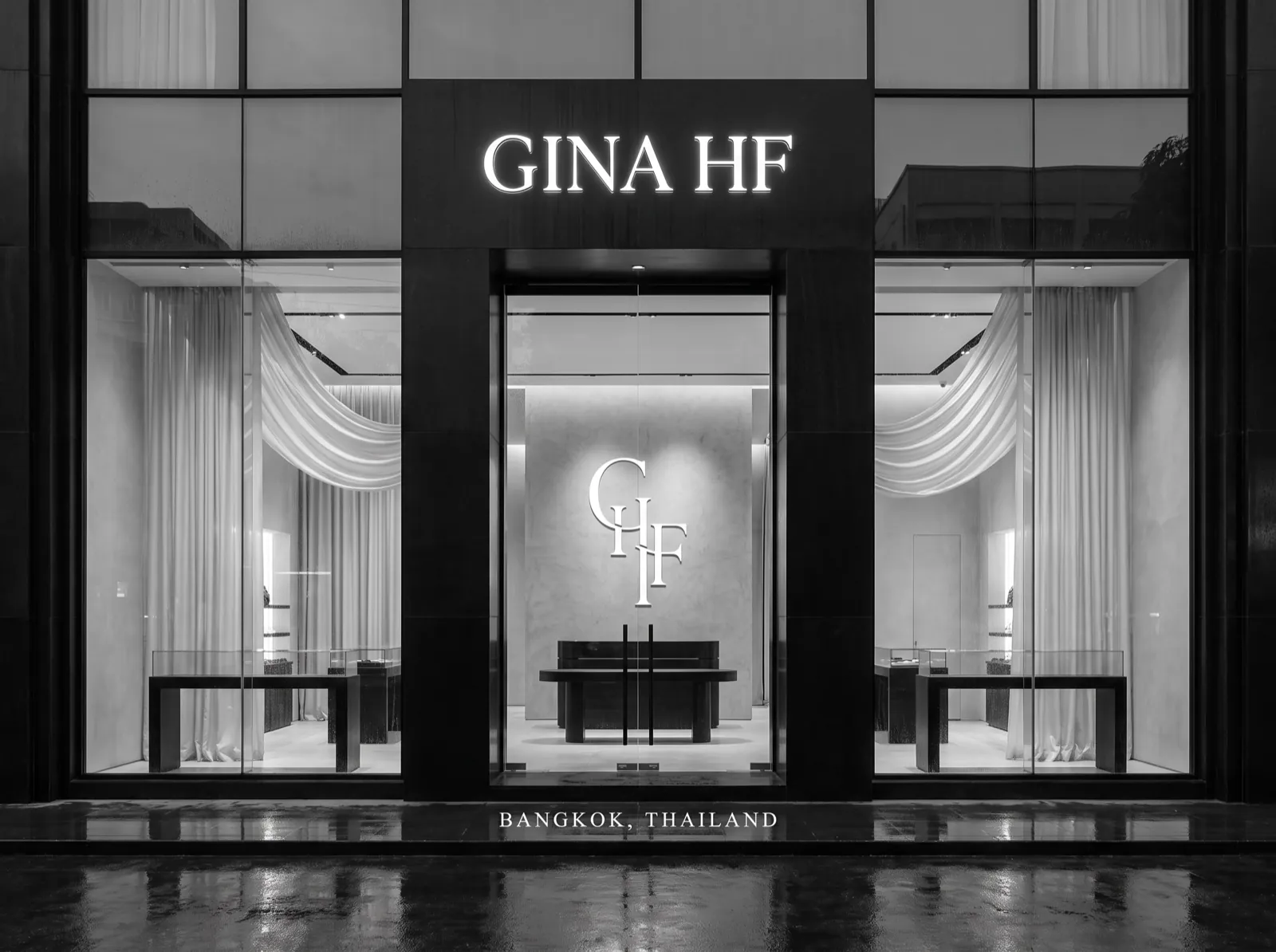
The atelier — GINA HF, Bangkok
Why speed is punished more here than anywhere
Stretch mesh, tulle and fine silk share a property that separates them from woven wool: they do not forgive correction. Unpick a seam in coat cloth and press it and the evidence disappears. Unpick a seam in power mesh and you are left with a permanent line of needle holes. Unpick a seam in charmeuse and the punctures stay visible under raking light for the life of the garment. This is why the room runs slowly. Every operation in an intimates atelier is effectively a first and only attempt, and a maker who works at a pace that produces one error per hour is not fast. She is destroying material.
Patience is the true material
We talk a great deal about silk and French lace, but the truest material in this work is patience. A machine can lay a hundred stitches in the time a hand lays one, and the machine's stitches will be flawless, identical and inert. The hand's single stitch carries a decision — a small adjustment of tension, angle, placement, made in response to that particular millimetre of cloth. Multiply it by the thousands of stitches in a finished piece and you have something no machine produces at any speed: an object made entirely of small human judgements.
The work we reserve for the quietest hours
Not every task requires silence. These do:
- Lace applique, where the motif is cut free of its ground and joined to silk along its own outline, so the two fabrics read as one.
- Hand-rolled hems on the lightest silks, where a single careless pull shows on the right side forever.
- Invisible slipstitching of strap ends and closures, where the entire art is to leave no trace at all.
- Bar tacking at the anchor points — small, dense, deliberate, placed where years of load will land.
- The final inspection under raking light, seam by seam, which is handwork of a kind even though nothing is sewn.
Buying back time from a hurried world
There is a deeper reason the quiet matters. To work slowly and by hand, in an age that prizes speed above almost everything, is a small refusal. The patience folded into a hand-finished garment is patience the wearer did not have to find for herself. She receives, along with the silk, a measure of unhurried time — and time is the rarest luxury there is.
So when a visitor lowers her voice on entering, she has understood something true without being told. The quiet is part of the craft: the condition the work requires, the climate in which patience does its slow accumulating, and one of the things the garment carries out of the room and into a woman's most private hours.