Six millimetres decides whether a seam can be sewn, felt against the skin, or altered in five years. The least glamorous line on a pattern, and one of the most consequential.
Between the line where a pattern piece is cut and the line where it is stitched there is a margin, and it is usually six millimetres wide. It contributes nothing to the appearance of the finished piece, is never seen by the woman who wears it, and quietly determines whether the garment can be sewn accurately, whether it will be comfortable, and whether anyone will be able to alter it in a decade. It is the least romantic decision in patternmaking and among the most consequential.
Why lingerie uses so little
A dress is cut with fifteen millimetres of allowance and a trouser side seam with more. A cup seam is cut with six, sometimes less. The reason is curvature: a wide allowance on a tightly curved seam cannot lie flat when it is turned, because the outer edge of the allowance has a longer path to travel than the stitching line. It bunches, and on a bra cup that bunching sits directly against the skin at the fullest point of a curve. Narrow allowances are not an economy here. They are a structural requirement of building sharply curved things that must be comfortable.
Six millimetres has consequences at the machine. It leaves almost no room for the needle to wander, so the machinist is working to a tolerance a dressmaker would find punishing, on slippery silk and shifting mesh, along a seam that is curved in both directions. This is one of the honest reasons a well-made bra takes the time it takes, and why the skill of a lingerie machinist is a specialisation rather than a variation.
Flat seams, and why they take four times as long
A conventional seam has an allowance standing up inside the garment, and against skin that edge will abrade. The alternative is a flat seam — a flatlock, or a seam pressed open and topstitched down on both sides — in which the allowance is folded and secured so that nothing stands proud and there is no ridge to feel. Building a seam this way is roughly four passes of work where a plain seam is one: join, trim, turn, topstitch. Multiply that by the eleven or so seams in a bra and you have the difference, in hours, between a garment that is comfortable on hour twelve and one that is not.
“Nobody has ever complimented a seam allowance. Everybody has taken off a garment early because of one.”
The atelier
Where we deliberately leave more
Not every seam is cut narrow. In the places where a body is most likely to change — the cradle side seam, the wing, the side seam of a slip at the waist — we leave a deeper allowance, sometimes twelve or fifteen millimetres, and finish it so it can be opened again without damage. It costs a little fabric and buys the possibility of an alteration years later. A garment cut everywhere to the minimum is a garment that can never be let out, which is a decision made silently at the cutting table on behalf of a woman who was never asked.
- Six millimetres on curved cup seams — any more and the allowance cannot lie flat.
- Deeper allowance at cradle and side seams, where future alteration is most likely.
- Allowance is always stated on the pattern piece, never assumed; mixed conventions in one pattern are how garments end up the wrong size.
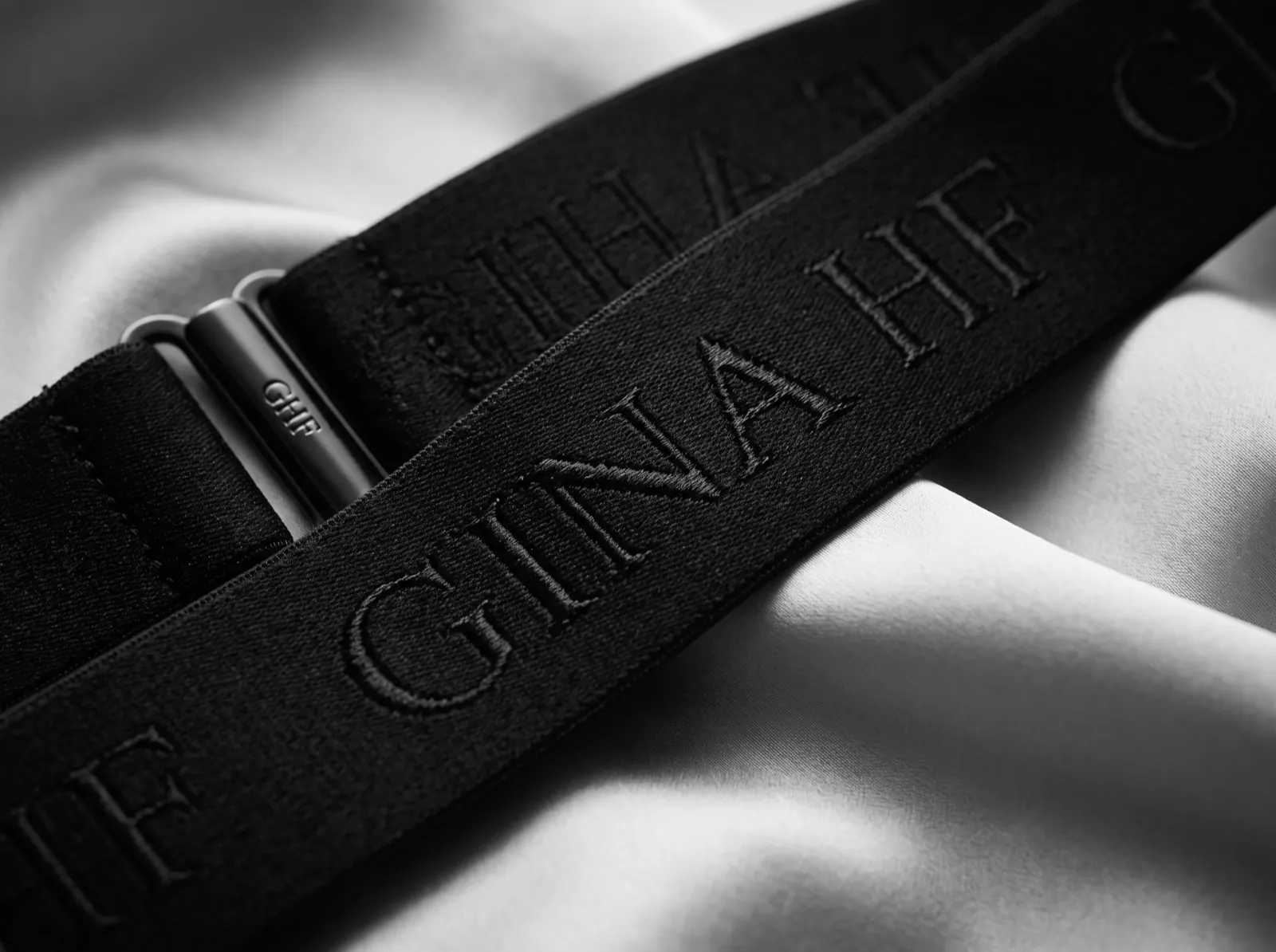
- Elastic edges carry no allowance at all — the elastic is the finish, and the pattern is cut to the finished line.
- Flat-finish every seam that touches skin; the ridge you can feel with a fingertip you will feel all evening.
The edges that have no allowance
One category of edge breaks the rule entirely. Wherever elastic is applied — the neckline of a cup, the leg line of a brief, the upper edge of a band — the pattern is cut to the finished line with no allowance whatsoever, because the elastic itself is the finish. Confusing the two conventions within one pattern is among the most common ways an otherwise competent draft produces a garment two sizes off, and it is why every piece leaving our pattern room carries its allowance written on its face rather than left to be inferred.