
Lingerie is the most disposable category in a wardrobe and has no reason to be. What actually determines whether a piece survives ten years, and how the cost per wearing really works out.
Nobody expects lingerie to last. The category has been priced, marketed and constructed around the assumption of replacement, and most women replace accordingly — a drawer refreshed every year or two, the old pieces quietly discarded because the elastic has gone slack and the lace has greyed. This is not a law of physics. It is a set of choices made at the cutting table, and different choices produce a garment that is still working in its tenth year.
What actually kills a piece
Almost never the fabric. Silk of a decent weight will outlast the woman who buys it if it is washed properly. What fails, in order, is: the elastic loses recovery; the wire channel opens at an end; the hooks distort; the seams that were finished quickly begin to abrade the skin and the piece becomes unpleasant before it becomes broken. Notice that three of those four are construction decisions, and the fourth is a material specification. None of them is about how the garment looked when it was new.
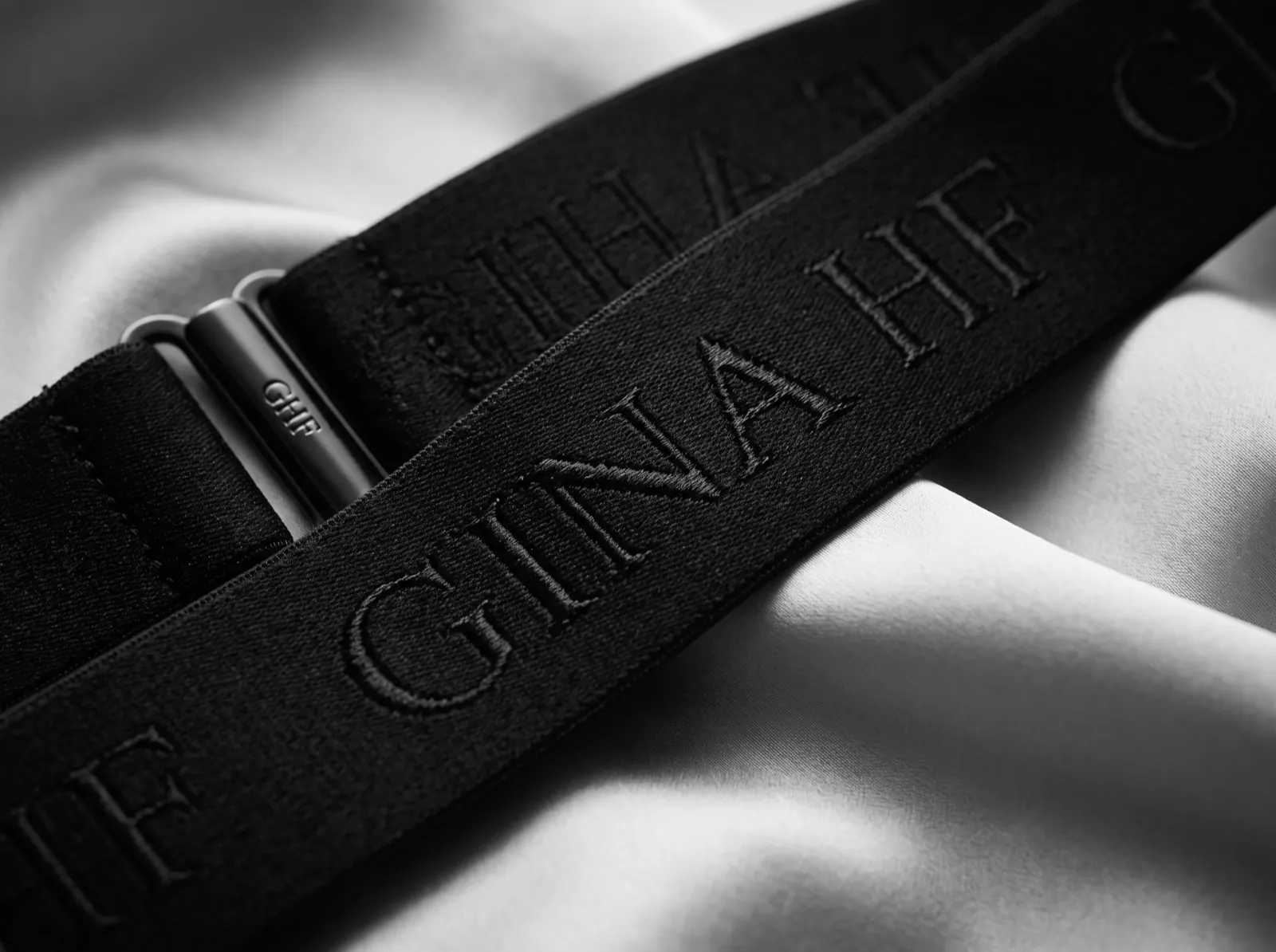
Elastic is the honest culprit. Elastane fatigues with heat, with chlorine, with detergent, and with being stretched to its limit rather than to a fraction of it. A band cut so that it must sit at ninety per cent of its extension will lose recovery in a season. The same elastic cut so that it works at sixty per cent will still be firm in five years. That difference costs a few extra centimetres of material per garment, and it is invisible at the point of sale, which is exactly why it is so often the first economy made.
The four decisions that buy a decade
- Elastic worked well within its range rather than at its limit, applied in two passes — attached, then turned and topstitched.
- Seam finishes that lie flat against the skin, so the garment stays comfortable as it softens rather than becoming abrasive.
- Wire channels closed by hand at both ends, and hook-and-eye tape reinforced where the tension concentrates.
- Generous seam allowances inside the cradle and side seams, so a body that changes by a size can be followed rather than abandoned.
“We build so that a piece can be altered in its fifth year. That single intention changes almost every decision made in its first week.”
GINA HF — Bangkok
Cut outlives fashion, and lingerie proves it
There is a second kind of endurance, which is aesthetic. Lingerie is unusually protected from the tyranny of trend, because it is worn privately and therefore judged privately. A slip cut on the true bias in silk of a decent weight looked correct in 1935 and looks correct now, for the straightforward reason that its shape is determined by the body underneath it rather than by a season's proportions. The things that date a piece are always applied rather than structural — a hardware finish, a synthetic lace with a particular sheen, a colour that belonged to one year. Cut, weight and proportion do not date, because they were never fashionable in the first place.
The arithmetic, done properly
Consider a woman who buys six inexpensive pieces a year for ten years, versus one who commissions two good ones every few years and cares for them. The second woman spends less. She also spends fewer hours in a fitting room, throws away almost nothing, and — this is the part that does not appear in the calculation — wears things she likes, every day, rather than keeping the good pieces for occasions and the tired ones for Tuesdays. Cost per wearing is a useful measure precisely because it exposes how bad the cheap path is at the thing it claims to be good at.
What endurance asks of you
Very little, and it must be done consistently. Rotate: no piece worn two days running, because elastane needs roughly a day to recover its length. Wash by hand in cool water with a mild detergent, and never wring. Dry flat and out of direct sun, never in a machine — heat is what actually destroys elastic, faster than any amount of wearing. Store cups nested rather than folded inward. Four habits, each costing a minute, and together they are the difference between a garment that is finished at eighteen months and one you will still be reaching for in a decade, when it has become the softest thing you own.