The bias-cut slip is the most fluent thing a woman owns — worn beneath everything by day, worn as itself by night. On grain, momme, hems that must hang, and what goes underneath.
There is nothing in a woman's wardrobe more fluent than a well-cut slip. It is the piece that lives closest to the skin and asks the least of her, and it changes its meaning entirely depending on what is put over it — or whether anything is. Beneath a dress it is invisible engineering. Alone in a room at midnight it is the whole garment. One length of silk, cut correctly, does both without altering a stitch.
What the bias actually does
A woven cloth has almost no give along the warp or the weft. Turn it forty-five degrees to both and the weave can shear — the threads pivot against one another, and suddenly the fabric stretches, recovers and drapes in a way no straight-grain cut can imitate. That is the bias. It is why a bias slip traces the hip without gripping it, why it forgives a body that has eaten lunch, and why it moves half a second behind you when you turn.
It is also why it is expensive. Bias eats fabric: laying pattern pieces diagonally leaves triangular waste no marker can reclaim, and a slip cut on the true bias can consume half again the yardage of the same slip cut on grain. It must be handled with an almost absurd delicacy at the cutting table, because the cloth will distort under its own weight before the shears reach it. A straight-grain slip hangs flat and reads cheap at every hour of the day. The bias is the entire difference.
Momme, and why 16 is not 22
Silk weight is measured in momme — the weight in pounds of a piece of a fixed traditional size. Practically, it tells you how the cloth will behave against a body. Sixteen momme falls: it is light enough to follow you, cool in a Bangkok evening, and it is what we cut when a slip must live under a dress without adding a millimetre of bulk. Twenty-two momme hangs: it has enough mass to pull the bias down into a long, liquid column, it is more opaque, and it is what we cut when the slip is meant to be seen. Neither is better. Choosing the wrong one is why a slip either clings where it should skim, or hangs like a curtain where it should breathe.
The hem that has to wait
A bias garment is not finished on the day it is sewn. Hang it on a form and it will keep growing — the sheared weave settles under its own weight, and the drop is not even: the side seams, sitting closest to the true grain, move differently from the front and back, which are on the full bias. Cut the hem straight away and you will find it dipping unevenly within a week. So we hang every bias slip for twenty-four to forty-eight hours before the hem is marked, and only then trim it level on the body. It is a full day of a garment's life spent doing nothing, and it is not optional.
For the same reason a bias slip is not lined. A lining is a second garment inside the first, and two bias layers will never agree on how far to drop; a straight-grain lining is worse still, because it cannot stretch with the outer cloth and will bind across the hip the first time you sit. If a slip needs opacity, it is given weight, not a lining. This is one of the few places in couture where the honest answer is a heavier cloth rather than more construction.
“The slip is the most honest thing a woman can wear. Everything put over it is the conversation she has chosen to have with the day.”
The atelier
Noon: the slip that is not seen
By day the slip does its quietest work. Under a fine knit it stops the wool reading your body back at the room. Under a silk or crêpe dress it removes static entirely — two silks slide against one another where a synthetic lining clings to tights and rides up the thigh by the second hour. Under anything pale it gives opacity without the flat, plastic tone of a bonded liner. Choose 16 momme, choose a colour matched to your skin rather than to the dress, and set the straps so the slip sits a fingerbreadth above the dress's hem. Done properly, nobody in the room will know it is there. That is the point.
The straps, which are not a detail
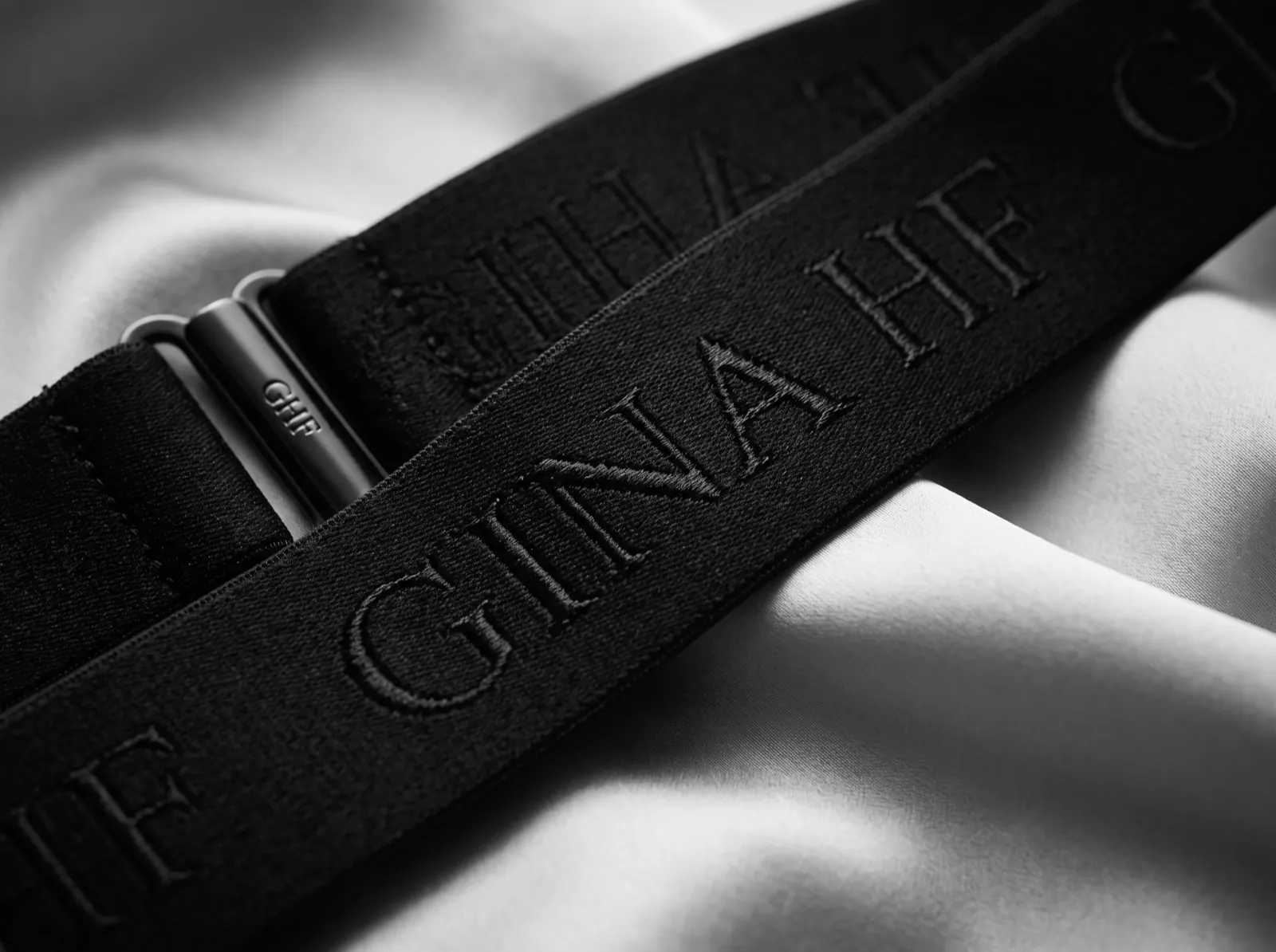
Adjustable straps exist because shoulders are not symmetrical and torsos are not standard lengths. Set them so that the slip's bust seam sits at the fullest point of you and the hem hangs level at the front — most women need a few millimetres of difference between left and right, and finding that difference once is the whole fitting. Straps carrying too much weight will drag the bias out of line and put a diagonal ripple across the front; if you see that ripple, lengthen rather than shorten. A slip should hang from the body, not be suspended from the collarbones.
What goes underneath
Very little, and chosen carefully. Because the bias reports every ridge beneath it, a brief with a flatlock seam — sewn so the two edges butt together and the join lies completely flat, with no folded ridge and no overlock bulk — will vanish where a conventional seam draws a line across the hip. A raw-cut leg edge, bonded rather than elasticated, does the same. If you wear a bra beneath, a smooth moulded cup with flat seams; lace under a 16 momme slip will telegraph its entire pattern to the room. And on some nights, nothing at all, which is a decision about how you want to feel and not a decision about how you will look.
Midnight: the slip that is the garment
Now you take things away rather than add them. The dress is on the chair, the day is over, and the slip is allowed to do what it was cut to do — catch a low light, move when you move, sit against the skin at body temperature within a minute of being put on, which no synthetic will ever manage. This is the hour the house designs for. Not a performance, and not for anyone: a bath, a lamp, twenty-two momme of silk against your back, and the particular dignity of having dressed beautifully for no one.
One piece, then, and two entire lives — the invisible one and the one that belongs only to you. Buy the cut before the colour, hang it before you hem it, wash it by hand in cool water, and it will follow you for years. The slip rewards the woman who treats it as a beginning rather than a finished thing.