
Someone always pays for a low price — a maker, a river, a landfill, and often the woman wearing it. An unsparing look at the bill that never reaches the counter.
Three bras can be made, shipped and sold for the price of a lunch. This is presented as a marvel of efficiency, and in a narrow sense it is. But no garment is that cheap to bring into the world — least of all one containing twenty-odd components and forty separate machine operations. When the buyer pays so little, the difference has not vanished. It has been moved somewhere she cannot see. The price is honest. The bill is not.
The first to pay are the hands
Intimate garments are among the most labour-intensive objects in all of clothing. A bra has more pieces than a shirt, more curves than a jacket sleeve, and demands tighter tolerances than either — a millimetre out on a cup seam is a visible fault. A garment sold for a few units of currency leaves only cents for the person who performed all of that. Across the garment towns of the world that arithmetic resolves into long shifts, unsafe rooms and wages that do not meet the cost of living in the same city. The saving is real. It was taken out of somebody's day. We learned this collectively and at terrible cost more than a decade ago, and the temptation to forget it is exactly as strong as the discount.
“When a thing is too cheap to be possible, look for who is paying the part of the price you are not. There is always someone. There is always a river.”
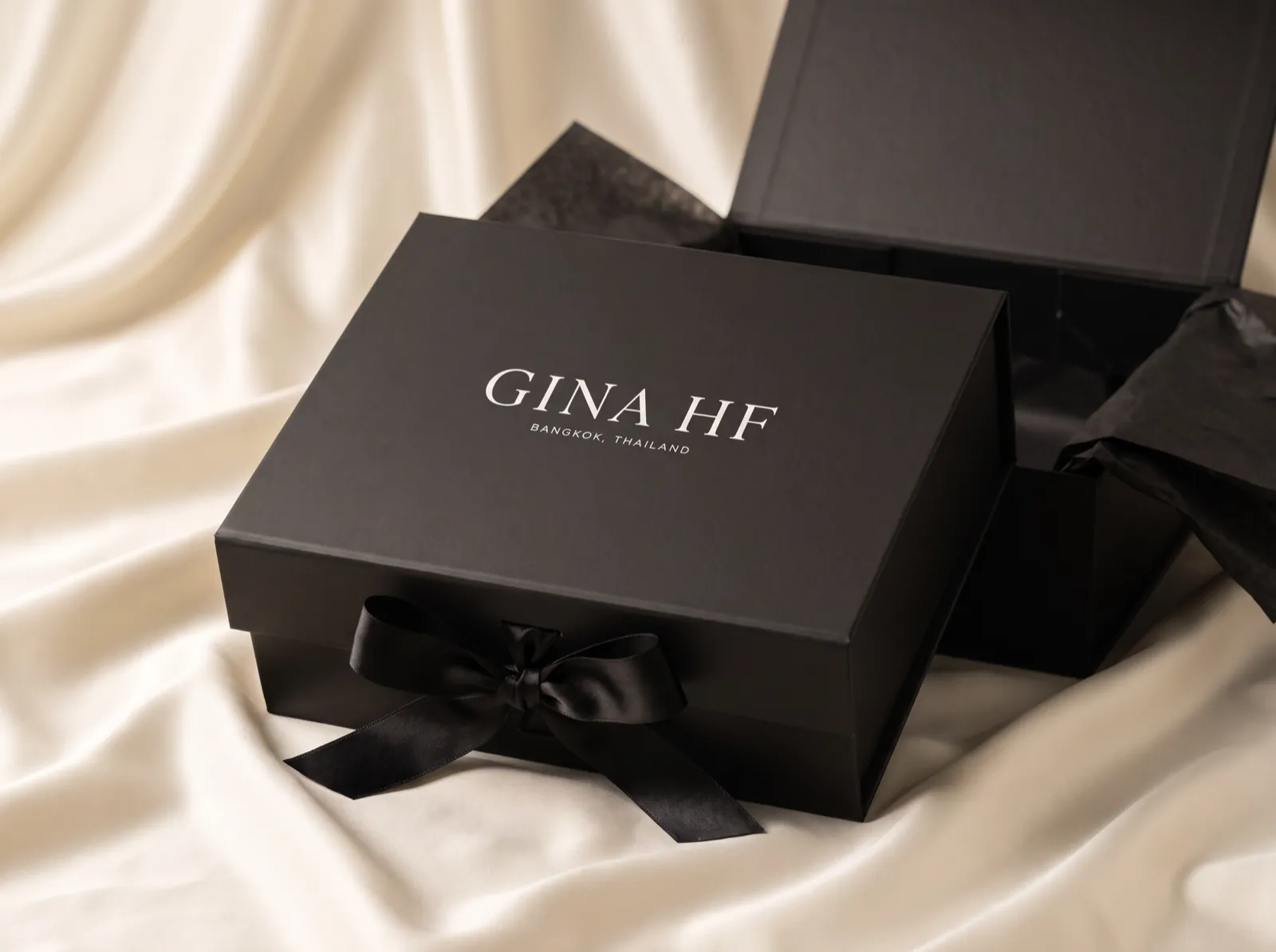
GINA HF — Bangkok
Then the water pays
Dyeing is where most of the environmental weight of any textile sits, and delicate pale shades are not exempt — they frequently require more processing, not less. Effluent from a mill that treats its water properly costs money; effluent flushed into the nearest canal costs nothing, and downstream the colour of next season runs in the river before it runs on the rack. A cheap garment is cheap in part because the water was treated as free, and water is never free.
Then the woman wearing it pays
This cost belongs specifically to this category and is almost never named. A cheap bra is not merely a bra that fails sooner; it is a bra that never worked. Sizing is compressed into a handful of nominal options because grading properly across cup volumes is expensive. Wires are chosen by length alone, with no attention to splay, so they sit on breast tissue rather than at its root and ache by mid-afternoon. Bands are cut long and made tight to compensate, which is why so many women wear a band that rides up the back and straps that carry weight they were never designed to carry — the shoulders and neck paying, daily, for an underband that was never engineered.
The result is a category in which enormous numbers of women have concluded that discomfort is intrinsic to the garment. It is not. It is intrinsic to a garment made at that price.
And finally the future pays
The cruellest economy here is how briefly the thing survives:
- A truckload of textiles is landfilled or burned somewhere in the world roughly every second, most of it barely worn.
- Intimates are effectively unrecyclable. Mesh, elastane, foam, metal wire and plastic hardware are bonded together, and no commercial process separates them economically. Every piece made in this category is made on a one-way trip.
- Synthetic fabrics shed plastic microfibres with every wash, and the tumble dryer — which also destroys the elastic — accelerates the shedding.
- Donated underwear is very largely unwanted and unsellable, so the usual consolation of the second-hand market does not apply here at all.
- The cheaper the garment, the shorter its life. This is not a coincidence. It is the business model.
What it means to pay the price in full
Luxury, properly understood, is a garment whose bill is paid honestly and at the counter: a fair wage inside the price, a treated dye inside the cloth, an elastic chosen for years rather than months, a fit engineered rather than approximated. It costs more because nothing has been quietly externalised onto a worker, a river, a landfill or the wearer's shoulders. That is not an indulgence. It is the receipt, paid in full, for something that exists without harm hidden inside it.
We make few things and make them to be kept, and we repair them when they come back. The price we ask is higher, and it is the whole price. We would rather a woman understood exactly what she was paying for than be offered a number with the truth taken out of it.