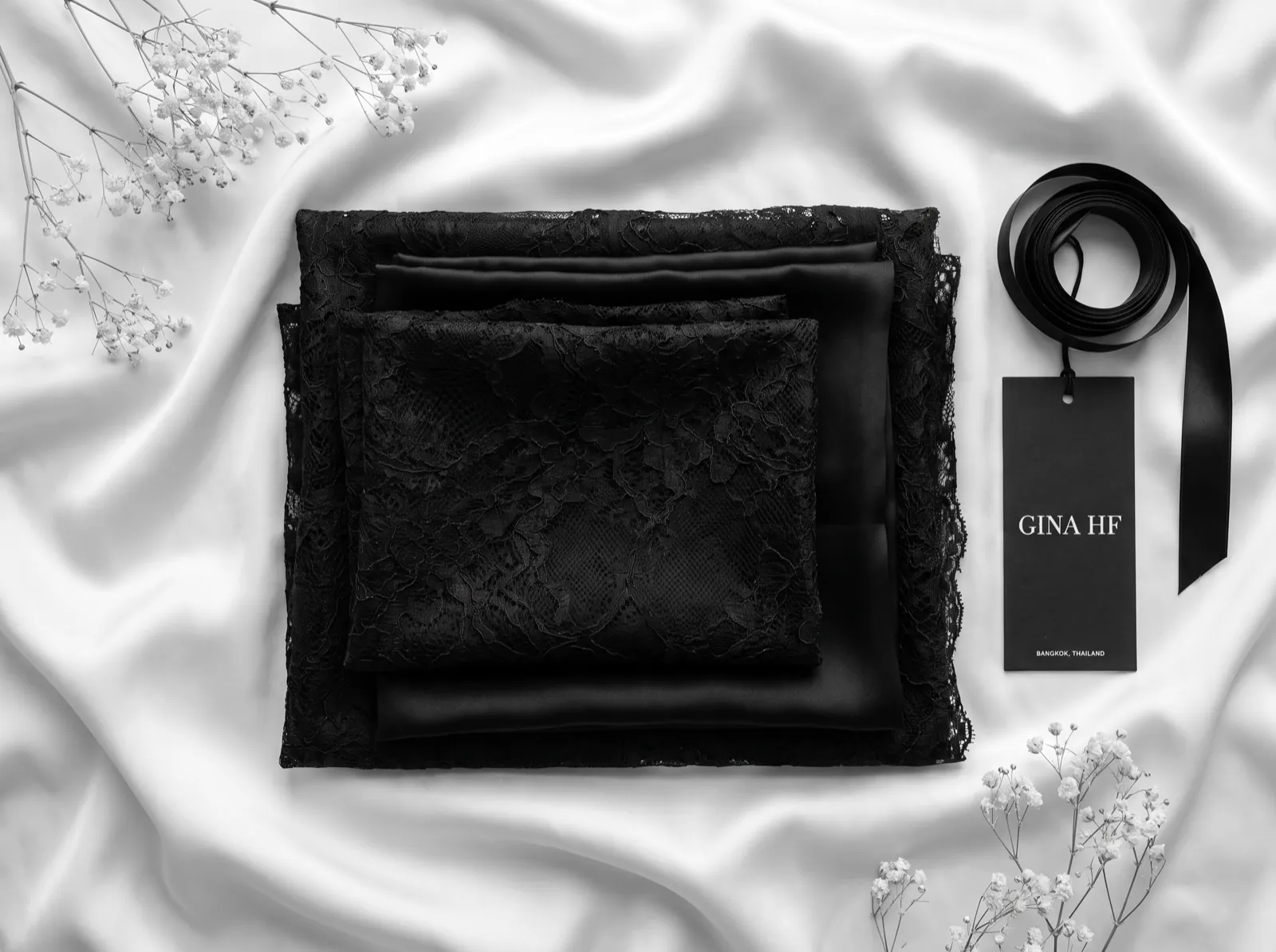
Transparency is a discipline, not a slogan. The full chain behind a single silk and lace slip — mulberry grove, reeler, dyer, narrow loom, trim maker, atelier.
Ask most houses where a garment was truly made and the answer arrives wrapped in fog: a country, a vague gesture toward craftsmanship, a logo, very little else. The fog is not an accident. A supply chain you cannot see is a supply chain that need not answer for itself. Transparency, then, is not a campaign. It is the decision to stop hiding, and it is harder than it sounds.
The chain behind one silk slip
Take a single bias-cut slip and follow it backward. It was cut and sewn in our rooms in Bangkok. The cloth came from a weaver; the weaver was supplied by a dyer; the dyer by a reeler who drew filament from cocoons; the reeler by a family who tended the mulberry that fed the silkworms. Five or six pairs of hands before the shears ever opened, often in five or six places, each link a point at which a thing can be done well or done quietly badly. To be transparent is to be able to name every one of those links and to stand behind what happens at each.
And the chain most houses never mention
Lingerie has a second chain that outerwear does not, and it is almost universally invisible: the trim chain. A single bra carries eleven or more distinct inputs, and every one has its own origin, its own factory and its own conditions of work.
- The lace, in our case from the narrow Leavers looms of northern France — a slow, energy-hungry, highly skilled process with a small number of surviving mills, all of them nameable.
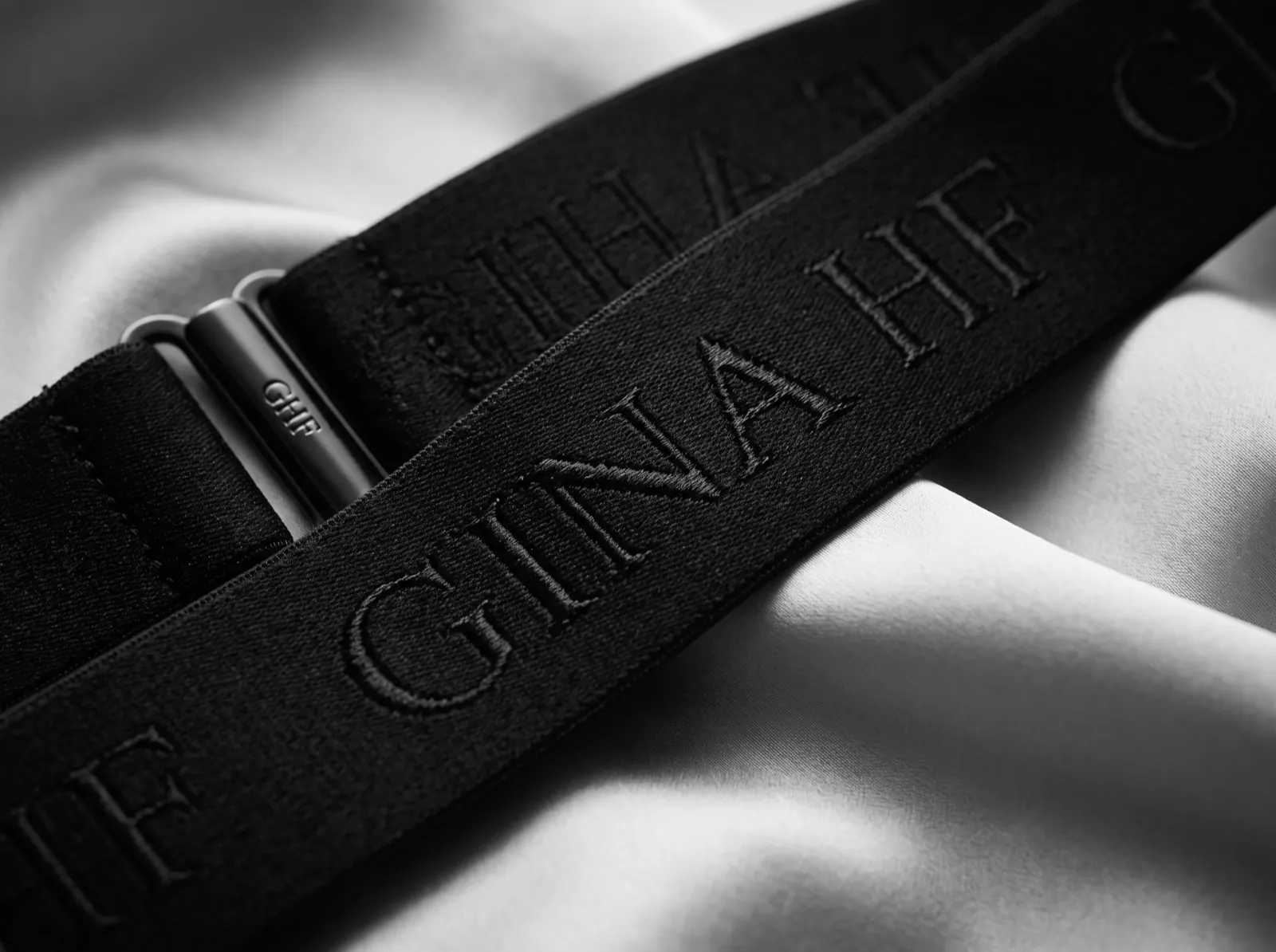
- The elastics — underband, picot, plush-back strap — which come from a handful of European and Asian trim specialists and which determine, more than the face fabric, how long the garment will last.
- The power net and tulle, spun with an elastane core whose producer is almost never disclosed by anyone.
- The hardware: rings, sliders, hook-and-eye tape, underwires. Small metal parts, made in volume, in factories no brand has ever photographed.
- The thread, the labels, the packaging — each with its own supplier and its own footprint.
A brand can publish a beautiful film about its silk and say nothing whatsoever about the wire in its cups. That gap is where most of the industry lives.
“If a house cannot tell you where the elastic came from, it has not sold you a luxury. It has sold you a mystery — and mystery is where harm likes to live.”
GINA HF — Bangkok
What honest tracing actually requires
It is easy to publish a tidy diagram and call it transparency. Real traceability is less photogenic and far more demanding: knowing, document by document, where each input came from and under what conditions it was made.
- Tier one — the atelier where the garment is assembled. Most brands stop their disclosure here, because it is the only tier they fully control.
- Tier two — the mills, lace makers and dye houses. This is where the majority of a garment's environmental cost is decided, and where dyeing wastewater is either treated or is not.
- Tier three — the spinners and reelers who turn fibre into yarn, frequently the most invisible workers in the entire chain.
- Tier four — the farm or grove where the raw fibre is grown, the link almost no house can name at all.
- And running alongside all of them, the trim tiers, which most brands do not even count as part of the chain.
Why a short chain is an honest chain
We work with a small number of weaving and dyeing partners in Thailand and a small number of European trim and lace suppliers, and we say so plainly, including where the answer is inconvenient — our lace is imported, and there is no local substitute that would not be a downgrade dressed up as a story. A short chain has fewer links to obscure, fewer hands nobody has met, fewer places where a wage or a wastewater rule can quietly be broken without our knowing. We cannot promise perfection. We can promise that the chain is short enough for us to be answerable for it.
A woman should be able to ask a simple question — who made this, and were they treated well — and receive a real answer rather than the fragrance of one. Transparency is uncomfortable precisely because it removes the place where excuses used to live, and that discomfort is the surest sign it is working.