Silk, heat, humidity and a century of hand-finishing. On why those four conditions make Bangkok an unusually honest place to build an intimate atelier.
People assume a lingerie house must begin in Paris, or in the Calais–Caudry corridor where the Leavers looms still run, or in one of the northern Italian mills that supply half the industry with its mesh. We began in Bangkok, and we did not do it for the story. We did it because four specific conditions exist here at the same time, and we have not found all four together anywhere else.
The first condition: silk that has not travelled
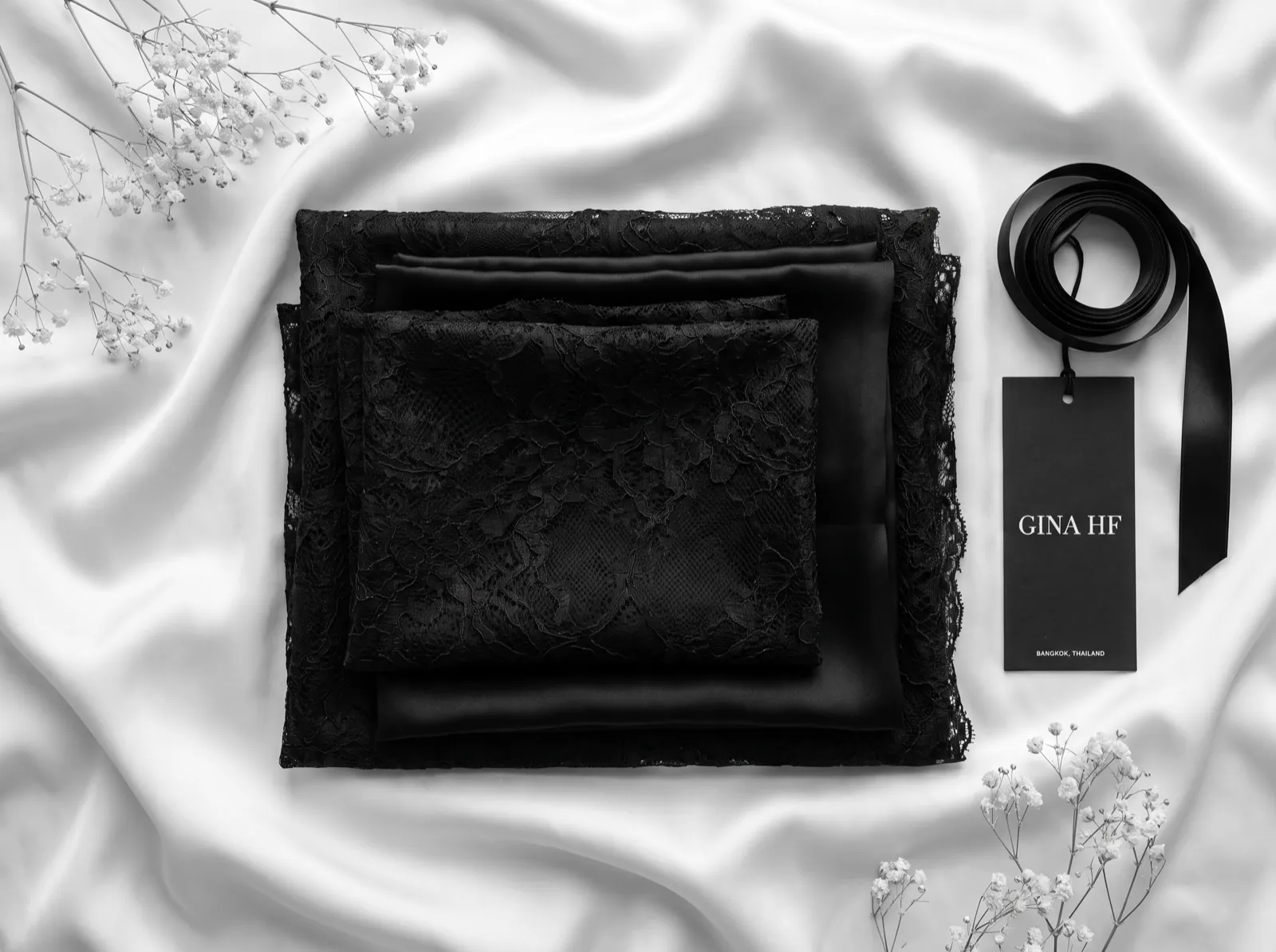
Thailand still reels, dyes and weaves silk domestically at a scale that has largely disappeared elsewhere. That matters less for romance than for control. When a mill is a few hours away rather than three time zones, you can stand at the loom and ask for four momme instead of five; you can reject a dye lot in person; you can watch a warp being set and understand why a particular crêpe will or will not behave once it is cut on the bias. Nearly every decision that determines whether a slip falls beautifully over a hip is made at the cloth stage, and those decisions are very hard to make by email.
Silk weight is the clearest example. A charmeuse at sixteen momme has body and a certain formality. The same weave at nineteen momme drapes with real weight and hangs true from the bias, but reads heavy against skin in this climate. At twenty-two you are approaching a cloth for outerwear. The difference between these is invisible in a photograph and decisive on a body. Proximity to the mill is what allows us to argue about it properly, with the cloth in hand.
The second condition: a climate that tells the truth
Bangkok is hot and humid for most of the year, and this is an underrated advantage when developing intimate garments. Heat and humidity expose every shortcut in a fabric within an hour. A synthetic jersey that photographs like silk will hold moisture against the skin and announce itself immediately. A poorly chosen elastic loses its recovery faster in this air than in a temperate showroom. A seam allowance finished with a hard overlock edge will chafe here in a morning, where in a cool climate it might take a season to become a problem.
We treat the city as a test chamber. If a piece performs through a Bangkok afternoon — no cling, no marking, no elastic surrendering by evening — it will perform anywhere. The reverse is not true, and a great deal of lingerie developed in mild rooms fails quietly the first time it meets real weather.
The third condition: hands
Intimate construction is disproportionately hand-work. A bra of moderate complexity contains between twenty and thirty separate components, many of them under two centimetres. Cup seams are short, curved and unforgiving; a millimetre of drift across a cradle seam changes where the apex sits, and therefore how the whole garment reads on the body. Lace appliqué over tulle — where the motif is cut to its own outline and stitched down so that no straight seam ever interrupts the pattern — cannot be automated at any quality worth the name.
Bangkok has a deep pool of makers who have spent decades doing exactly this kind of work: fine hand-finishing on delicate cloth, at a level of patience that industrial production has trained out of most places. Our senior fitters can read a toile on a body and tell you which of two millimetre adjustments will solve it. That knowledge is not written down anywhere. It exists in hands, and hands stay where they are.
- Domestic mills mean fabric decisions are made in person, at the loom, in weeks rather than seasons.
- A hot, humid climate exposes weak cloth, weak elastic and hard seam finishes within hours rather than months.
- Fine hand-finishing on small curved components is still a living, everyday skill here.
- European lace — Chantilly and Leavers — is imported deliberately, because that is where those looms are.
- Nothing in the house is sourced for narrative. Each element comes from wherever it is genuinely best.
The fourth condition: no inherited assumptions
There is a fourth reason, and it is the one we value most. Building outside the established centres meant we inherited none of their habits. We were not obliged to accept the cup grading conventions that have been copied from house to house since the 1950s, most of which scale a cup by enlarging every dimension proportionally — which is not how breast tissue actually behaves across sizes. We were not obliged to accept that a band should be cut with two inches of ease, or that a strap must be a fixed width regardless of the load it carries, or that a garment for a larger cup must be visually apologetic about itself.
Starting elsewhere let us ask, in each case, why. Some of those conventions turned out to be sound engineering and we kept them without alteration. A surprising number turned out to be nothing more than the accumulated residue of what happened to be cheap to manufacture in 1963, and we discarded them.
“We did not come here for the story. We came for the cloth, the climate and the hands — and then we stayed for what the distance allowed us to question.”
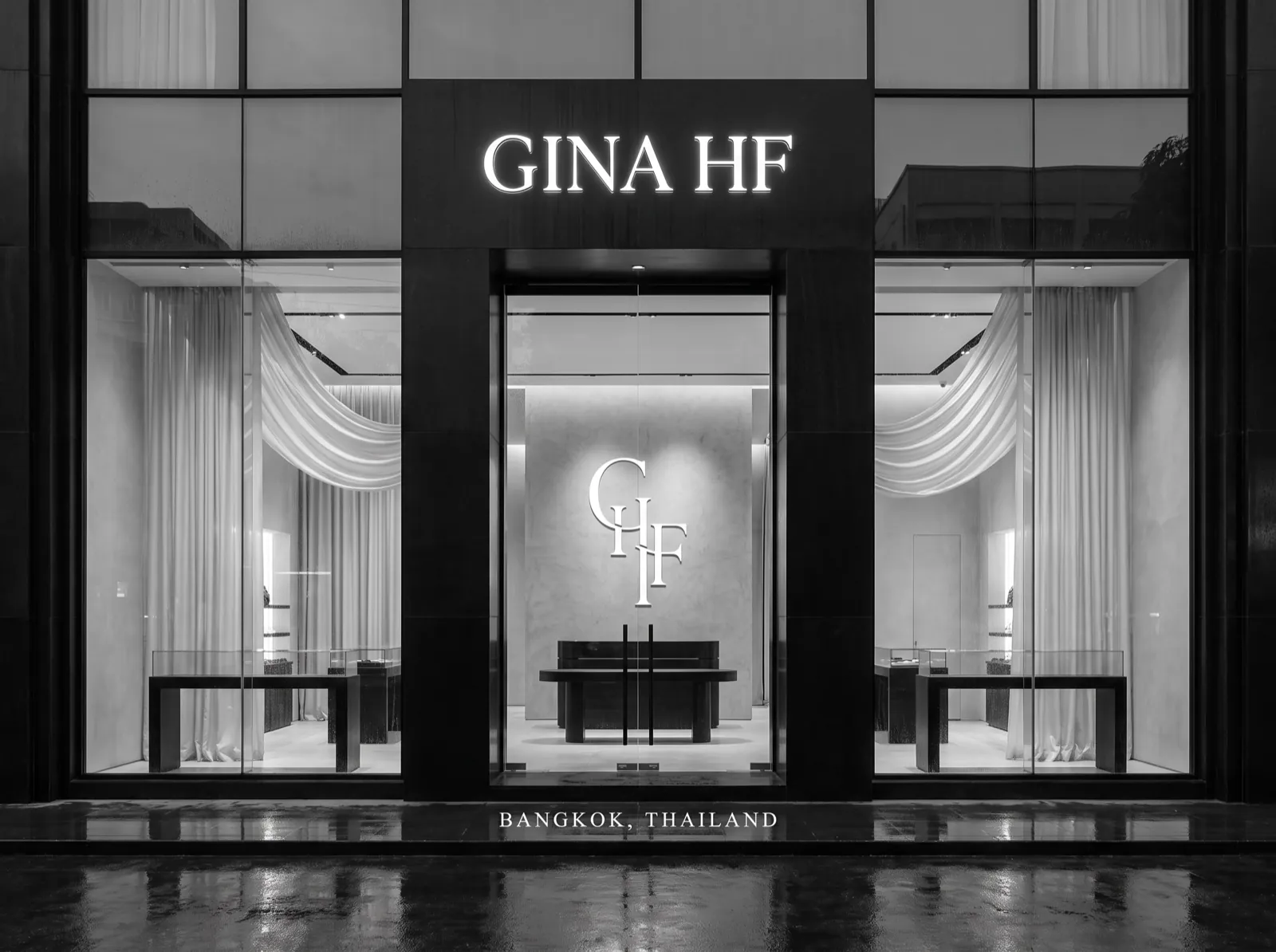
The atelier, Bangkok
From here, outward
A house rooted somewhere specific does not have to be provincial. Our lace comes from France because that is where those looms are. Our power mesh comes from Italy because the Italians have spent forty years perfecting the recovery characteristics we need. Our silk comes from within our own country because it is genuinely excellent and because we can stand next to it while it is made. None of this is patriotism. It is what happens when each element is decided on its merits rather than on the address it will let you print on a label.
What Bangkok gives the finished garment is not visible. It is in the fact that a slip has been worn in real heat before it was approved; that a band tension was set by a fitter who has fitted several thousand women; that a silk was rejected twice before the third lot was accepted. The city is not the story. It is the reason the garment behaves.