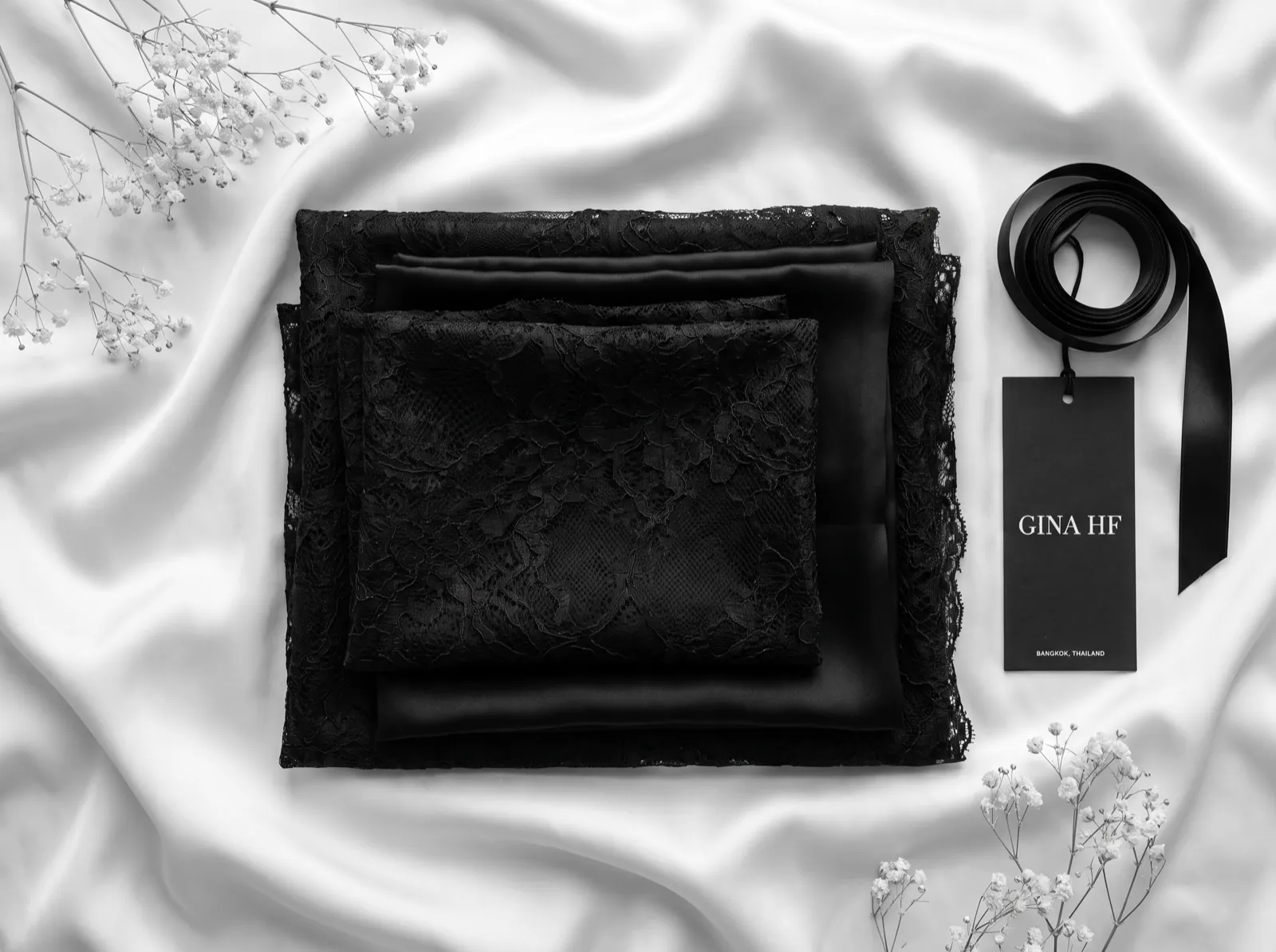

A clear-eyed guide to when dry cleaning is truly necessary for lingerie — the few pieces that need it, the many it quietly harms, and how to choose a cleaner worth trusting.
Dry cleaning occupies a strange place in the modern wardrobe. For some it is a reflex — anything expensive goes in the bag. For others it is a last resort approached with suspicion. In lingerie the truth is unusually clear, and it is not the answer most women expect: the great majority of what you own should never see a solvent at all. Dry cleaning is a precise tool with a narrow purpose. It cleans structured, non-washable construction using solvent instead of water. Used at the right moment it is invaluable. Used as a habit, it destroys exactly the pieces it is meant to protect.
What genuinely needs the cleaner
A short list, and it stays short. These are pieces whose interior construction would warp, shrink at different rates or dissolve in water:
- Boned corselettes and basques with a fused interlining, where the adhesive that bonds the layers softens in water and the piece bubbles permanently.
- Bridal and ceremonial pieces with beading, sequins or hand-applied appliqué set with adhesive.
- Anything combining a lace, a silk and a stiffened panel that will shrink at three different rates in a basin.
- Pieces with leather or metallic trim that water marks irreversibly.
- Vintage or heirloom lingerie of unknown fibre and unknown dye stability, where a first wash is a gamble you only take once.
What it quietly harms
Everything else. Perchloroethylene and the modern hydrocarbon solvents are hard on elastane in particular; repeated cleaning leaves a band that has lost its recovery, and a bra that has lost its band has lost its function, since roughly eighty per cent of the support in a well-fitted bra comes from the band rather than the straps. Silk dulls and can yellow at the edges. Foam cups absorb solvent and hold the smell of it for weeks. And the finishing presses, set for speed and for jackets, will flatten a moulded cup or crush a lace relief in one pass by a technician who has no reason to know better. If a piece can be washed by hand, hand-washing serves it better — and a bra can nearly always be washed by hand.
“We send the boned pieces out and wash everything else ourselves. The cleaner is for construction, not for cleanliness. Cleanliness, most of the time, lives in a basin at home.”
GINA HF — Bangkok
The stain rule
If a piece carries a mark you cannot lift, take it in at once and say exactly what it is and when it happened. The great enemies of stain removal are time and heat — a stain that is days old, or one that has been through a warm press, has become part of the cloth. Never press over a mark, never attack it with a household product first, and never let it wait. Two stains particular to this category deserve naming: deodorant on an underarm edge, which is alkaline and sets into silk within a day but rinses out easily if caught the same evening, and body oil at the band, which yellows slowly and is far easier to prevent by washing weekly than to remove after a season.
The repairer you actually need
For lingerie, the more valuable relationship is not with a cleaner at all. It is with someone who repairs — an alterationist or a corsetière who will replace a fatigued hook-and-eye tape, re-elasticate a slack leg edge, re-cast a wire into a fresh casing, or shorten a strap that has stretched. Those four jobs account for nearly every piece a woman gives up on, and each of them takes under an hour in competent hands. A house that will not repair what it sold you has told you what it thinks the piece was for. Ask the question before you buy, not after.
Choosing a cleaner worth the name
When you do need one, the difference between cleaners shows on your clothes. A serious cleaner asks questions before taking a piece — about fibre, about the stain, about how you want it finished — and will hand-finish a delicate garment rather than feeding it through the same press as everything else. They will tell you when a piece is better left alone, which is the surest sign that they know what they are doing. Find one, build the relationship, and bring them the two or three pieces a year that genuinely call for their skill. The rest, you can care for yourself — which is both cheaper and considerably kinder.
Think of the cleaner as a specialist surgeon rather than a family doctor. You do not visit for every small thing. You go when the case genuinely calls for that particular skill — and the less often you need them, the longer your things will last.