The practice of making intimates last — rotating rather than repeating, repairing early, washing cool, and the honest answer to how often a bra really needs replacing.
The most sustainable garment is the one you already own, worn for years. This is the quiet truth beneath all the talk of slow fashion: longevity is not a material you buy but a practice you keep. A beautifully made piece can be finished in two seasons by carelessness, and an ordinary one carried for a decade by attention. The difference is almost never the price. It is the habits of the woman who owns it — and in lingerie, more than anywhere else in a wardrobe, those habits are unusually specific and unusually decisive.
Rotation is not luxury; it is mechanics
Here is the single most valuable fact in this article. Elastane is a coiled polymer that recovers its resting length only when the tension comes off, and that recovery takes time — roughly a day. A bra worn on Monday and again on Tuesday never gets it. The band goes on stretched, comes off stretched, and the coils that should have relaxed overnight instead take a permanent set. In practice, a bra worn every other day lasts something close to twice as long as the same bra worn daily. This means the frugal instinct — own two, wear them constantly — is genuinely more wasteful than owning six and rotating. Rest is not indulgence. It is how the material works.
- Never wear the same bra two days running. Give every piece a full day off.
- Wash in cool water. Heat is what kills elastane, and a machine's warm cycle does more damage in one hour than a month of wearing.
- Never a tumble dryer, at any temperature, for anything with elastic in it.
- Fasten the hooks before washing and before storing, so no hook travels across a lace ground.
- Air a silk slip or camisole overnight rather than washing it after a single evening — silk resists odour and renews itself in fresh air.
- Wash anything worn against skin all day — a knicker, a base layer — after every wear. Body oil left in a fibre oxidises and yellows.
How long a bra actually lasts
The number the industry repeats is six months, and it is nonsense sold by people who would like you to buy two a year. The honest answer is a range and it depends almost entirely on rotation. A daily-worn bra, machine-washed warm and tumble-dried, is finished in six to nine months — the band has gone, and no amount of tightening the hooks brings it back. The same bra hand-washed cool, dried flat, and worn every third day will hold its shape for two to three years, and a well-made one longer. The way to know is not the calendar but the hooks: a new bra should fit on the loosest hook, and you move inward as the band relaxes over its life. When it no longer supports you on the tightest hook, the band has given up and the piece is finished, however good the lace still looks. That test takes five seconds and it is the only one that matters.
Repair at the first sign
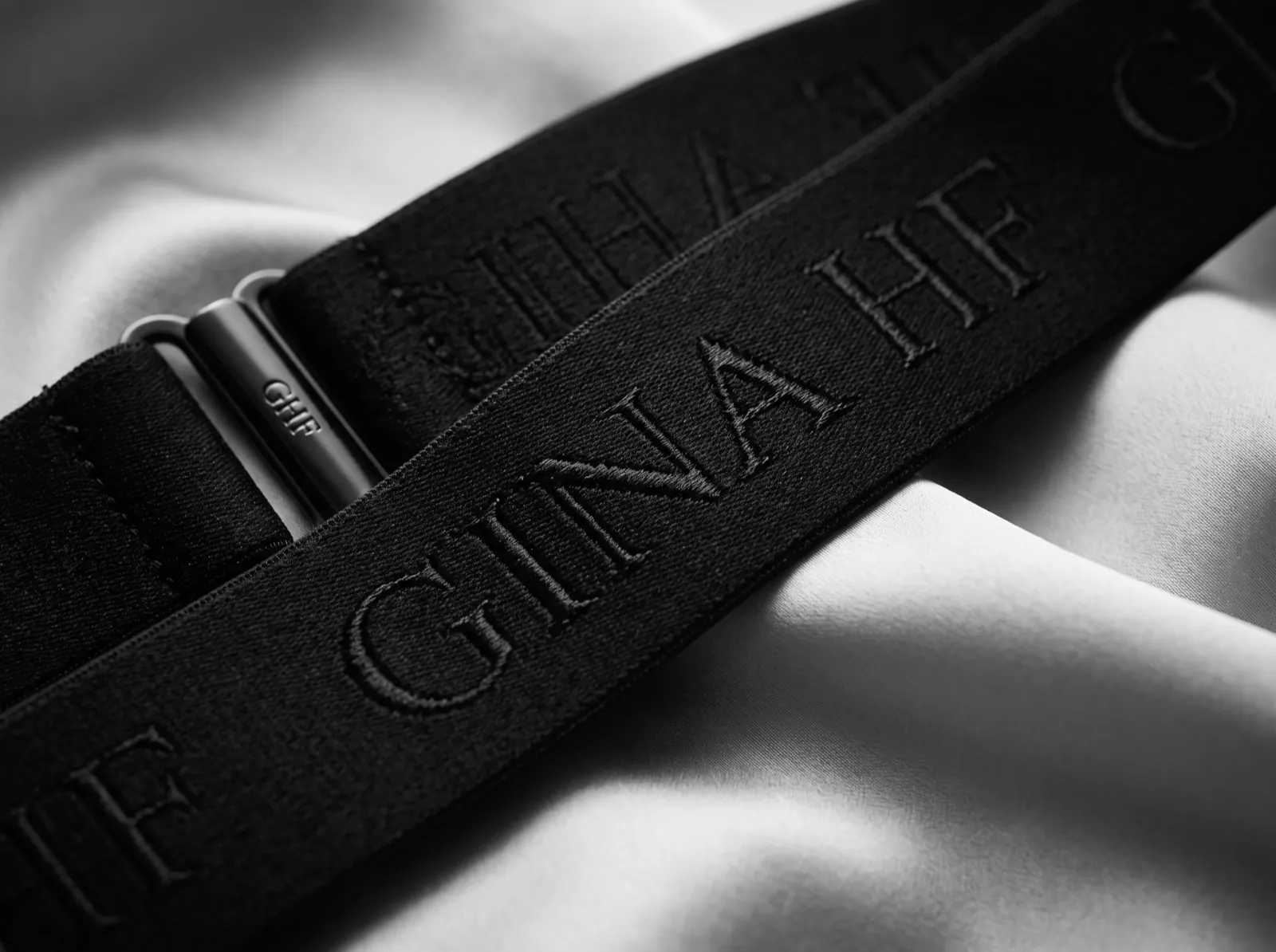
A loose hook is a missing hook waiting to happen. A softened bar-tack at the end of a wire casing is a wire through the fabric within a month, and once a wire has come through it has usually taken the casing with it. The habit that most distinguishes a lasting drawer is the willingness to mend early — to catch the first loose thread, the first slack edge, the first slider that has begun to crack, and deal with it while it is small. Learn to replace a hook-and-eye tape and to re-thread a slider; both are ten-minute jobs. For the rest, find someone who repairs lingerie and use them. A timely repair is invisible; a neglected one is why a beloved piece is thrown away.
“Things do not wear out all at once. They wear out at one point — a hook, an edge, the end of a wire — and then everywhere, because that one point was ignored. Mend the one point and you keep the whole.”
The atelier
Fit is a longevity decision
The most expensive mistake in this category is not a bad wash; it is a wrong size. A band bought too loose is worn on the tightest hook from the first week, which means it starts its life with no reserve at all and is finished the moment it relaxes even slightly. A cup bought too small takes all its stress at the wire ends and at the upper seam, which is precisely where a bra fails. Being fitted properly does not merely feel better — it distributes load the way the construction intended, and a garment carrying its designed load lasts several times longer than one fighting the wrong body. This is why a fitting is not a sales ritual. It is the first act of care.
Buy as if for keeping
Longevity begins at the moment of purchase. Choose natural fibres for the panels that touch you, because they age gracefully where synthetics pill and grey. Look for a wire properly cased and bar-tacked, a hook-and-eye tape on a woven ground rather than a flimsy knit, a strap with generous adjustment left at both ends, and a seam that is flat rather than lapped over itself. Favour a line you will still want in five years. A piece bought to be kept is cared for differently from one bought to be replaced — and that intention, more than anything, gives it its long life.
The reward is not only a drawer that looks new. It is the particular pleasure of things that hold your history — the slip that has softened against your skin across years, the piece you reach for without thinking because it has never once let you down. These are not possessions any longer. They are companions, and they are the truest definition of luxury there is.