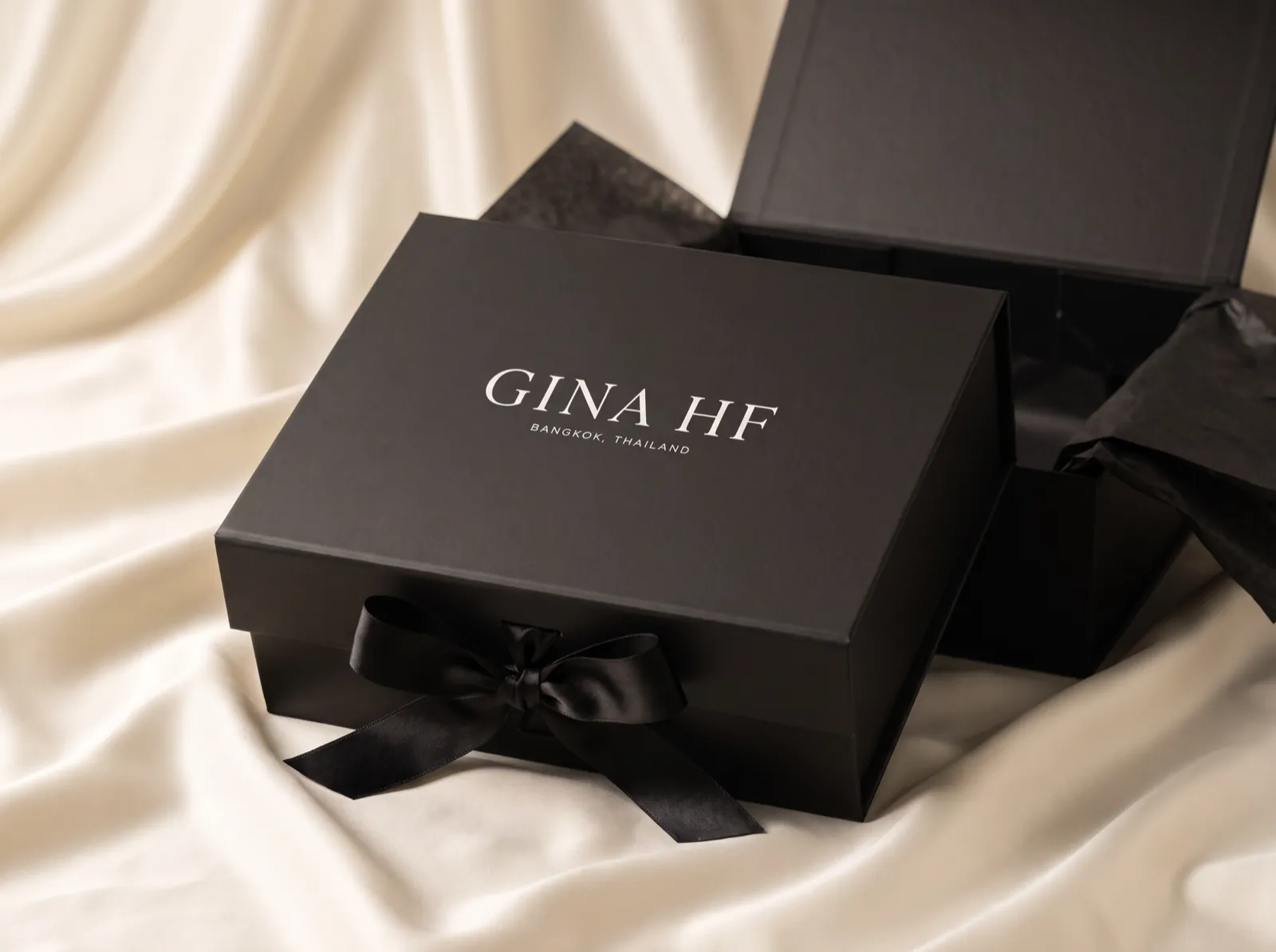
A deliberately narrow frame — five colours, three cloths, one base silhouette — makes the drawer interchangeable, the dye lots consistent and the pattern archive cumulative. Restraint as an engineering decision.
There is a persistent belief that a designer with unlimited options will produce something better than a designer with few. Anyone who has actually stood in front of a wall of a thousand colours knows the opposite. Choice without a frame is not freedom; it is delay. Our frame is deliberately small and it is written down: five neutrals, three materials, one base silhouette. Everything the house makes is built inside it, and the frame is the reason the work moves quickly and the reason it holds together.
What the frame actually is
It is not a mood or a philosophy. It is a specification, and it fits on a card.
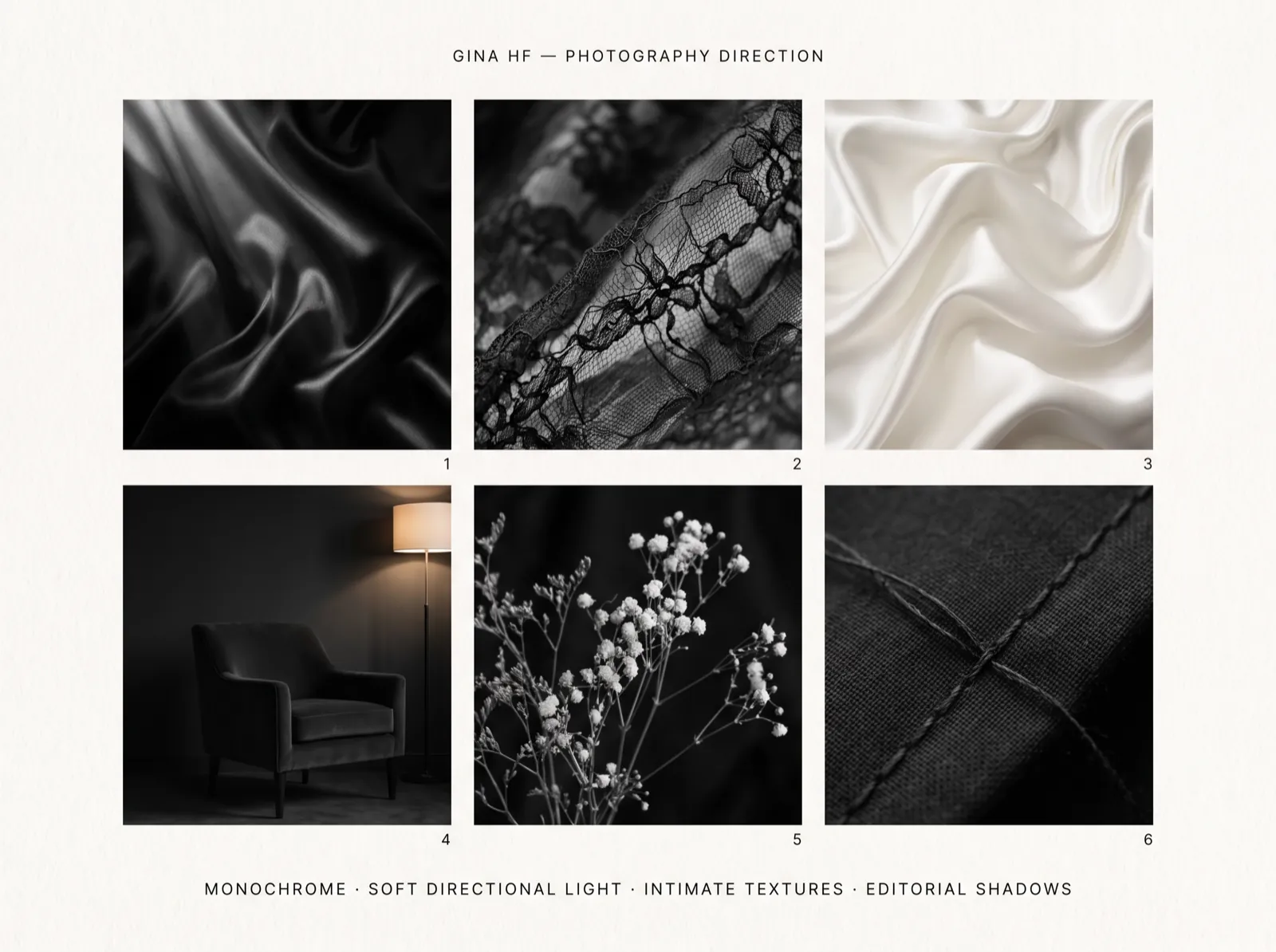
- Five neutrals: Noir, Ivory, Porcelain, Smoke, Charcoal. No seasonal colour is added and none is retired.
- Three materials: bias-cut silk at 16 to 22 momme, French lace (Chantilly and Leavers), and the tulle and power mesh that carry the structure.
- One base silhouette per category, refined continuously rather than replaced — a slip, a soft-framed cup, a brief cut from the same block.
Every drawer becomes interchangeable
The first and most practical consequence belongs to you rather than to us. When the palette never moves, anything bought this year sits correctly beside anything bought three years ago. A Porcelain slip made now reads against a Porcelain brief made two seasons back, because it is the same specified tone and not a new interpretation of a similar idea. There is no orphaned piece — no beautiful thing stranded because its exact shade was made once and never again.
This is also why we can offer a set as separates. A body is not one size; a great many women take one size on top and another below. When every piece belongs to the same closed system, a top and a bottom bought in different sizes, at different times, still read as one thing. Under a wide palette that is impossible, and the customer absorbs the failure by buying matched sets she only half fits.
Dye lots you can actually hold
Dyeing silk is a chemical process with real variance. The same recipe, the same dyehouse, a different week — and the result can drift enough to be visible when two pieces are laid together in daylight. The industry manages this by giving each production run a lot number and quietly accepting that lots do not match.
With five fixed tones, we do the opposite. Each neutral is held as a physical reference standard in the atelier, and every incoming lot is compared to that standard under controlled light rather than to the previous lot — because comparing to the previous lot lets the colour walk slowly away from itself over years, one acceptable step at a time. Silk, lace and mesh each take dye differently, so the same tone is proofed separately on all three cloths before a run is approved. This is only possible because there are five tones. At forty, it is unaffordable, and the industry's tolerance for drift stops being a choice.
“The limit is not a smaller room. It is a room whose walls you have stopped bumping into, so you can finally see what is inside it.”
GINA HF — Bangkok
Small runs that can be repeated
A narrow frame makes small production honest. Because the same three cloths run through everything, fabric is bought against the whole year rather than against one style, and a run of forty pieces does not have to carry the cost of a bolt nobody will use again. Because the tone is a fixed standard rather than a one-off, a piece that sells out can be made again in eight weeks and be the same piece — not a near-match with a new lot number and a slightly different Smoke.
The machine setup benefits equally. A flatlock head balanced for a specific mesh weight stays balanced, because the mesh weight does not change between styles. Changing materials means re-tensioning, re-testing and discarding trial seams, and that cost falls hardest on small runs. Keep the materials fixed and a run of forty carries almost no setup penalty at all — which is precisely what makes forty a viable number instead of a loss.
A pattern archive that compounds
The deepest benefit is the one nobody sees. Because there is one base silhouette rather than a new one each season, the patterns are not redrawn — they are corrected. Every fitting, every eight-hour wear test, every note from a made-to-measure client goes back into the same block. The cup seam angle that was moved three millimetres two years ago is still moved. The strap placement that solved a gape at the larger end of the grade is still there.
A house that reinvents its silhouette each season starts every one of those arguments again from the beginning, and its patterns are only ever as good as the last few months of work. Ours are as good as every fitting we have ever done. The block gets quietly, measurably better, and a piece made this year fits better than the same piece made two years ago for reasons neither of us could point to in a photograph.
What the frame costs
It is not free. We cannot answer a colour trend, and we will never have the season's shade. Novelty, which is the engine of most fashion, is not available to us. What we get in exchange is that nothing we make expires: no piece is dated by the colour it was made in, no piece is orphaned by a discontinued cloth, no piece is a worse version of itself because the pattern was started over.
That is the whole trade, stated plainly. The frame is fixed so that what happens inside it can be endless — a better seam, a truer grade, a hem that hangs a fraction more honestly than it did last year. Restraint is not the absence of ambition. It is the decision about where to spend it.